Howard Marks on AI, Debt vs Equity & Investing's Next 40 Years
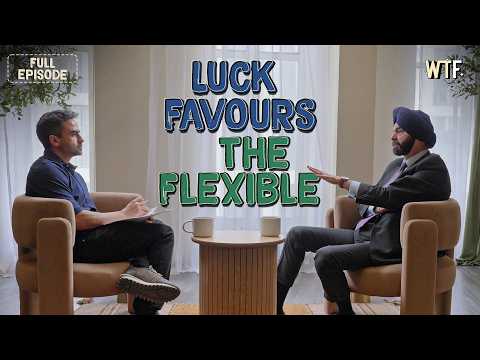
Legendary investor Howard Marks joins Nikhil Kamath to discuss AI's market impact, the strategic choice between debt and equity, and his outlook on investment strategies for the coming decades.

Quick summary
Howard Marks, in conversation with Nikhil Kamath, shares his nuanced views on the profound implications of AI for investment markets, distinguishing between hype and fundamental shifts. He also delves into the critical considerations for companies weighing debt versus equity in their capital structures, emphasizing the importance of timing and risk. Marks then offers a forward-looking perspective on the enduring principles that will guide successful investing over the next 40 years, stressing adaptability and a deep understanding of market cycles for long-term outperformance.
- →Howard Marks advocates for 'second-level thinking' to discern overlooked investment opportunities and avoid common pitfalls.
- →AI will fundamentally reshape economies and investment markets, demanding careful analysis to differentiate true innovation from mere hype.
- →The optimal balance between debt and equity financing is dynamic, requiring companies to assess risk, cost of capital, and growth prospects.
- →Long-term investment success over the next 40 years will be driven by adaptability, a deep understanding of market cycles, and emotional discipline.
Questions answered
- 1What is Howard Marks's view on AI's impact on investing?
- 2How should investors weigh debt against equity in a company's capital structure?
- 3What investment strategies will succeed over the next 40 years?
- 4Why is 'second-level thinking' crucial for investors?
- 5How can investors navigate market cycles effectively?
- 6What defines Howard Marks's overall investment philosophy?
Chapters
All 8 chapters across the full episode — click any to jump there.
Introduction
In a compelling discussion on Nikhil Kamath's 'People by WTF' series, renowned investor Howard Marks, co-founder of Oaktree Capital Management, offers his invaluable insights into the evolving landscape of global finance. Marks, celebrated for his insightful memos on market cycles and investment philosophy, engages with Kamath on critical topics shaping the future of capital. The conversation navigates the disruptive potential of Artificial Intelligence, dissects the perpetual debate between debt and equity financing, and provides a long-term perspective on what investing might look like over the next four decades. This episode serves as a masterclass for anyone grappling with how to build resilient portfolios, understand market behavior, and adapt to an era of rapid technological and economic transformation. Listeners will gain a deeper appreciation for second-level thinking, prudent risk management, and the cyclical nature of markets, all through the lens of one of finance's most respected minds.
More episodes on Investment Strategy & Macroeconomics · Browse all creators or recent episodes.
Why Howard Marks's Investment Philosophy Remains Crucial Today?
Howard Marks stands as a titan in the investment world, known for his incisive market memos that have guided generations of investors. His philosophy, rooted in understanding market cycles, valuing risk control, and embracing 'second-level thinking,' offers a timeless framework for navigating financial complexities. In an era of unprecedented technological change and economic volatility, Marks’s emphasis on discerning what others miss, questioning consensus, and prioritizing capital preservation resonates more powerfully than ever. He teaches that investment success comes not from predicting the future, but from preparing for a range of possible outcomes and reacting intelligently when opportunities or dangers arise.
Marks’s approach challenges the common inclination to extrapolate current trends indefinitely. Instead, he advocates for a deep understanding of history and human psychology, which he believes dictates the pendulum swings of market sentiment. This means recognizing when asset prices become irrationally exuberant or excessively pessimistic, and positioning portfolios accordingly. His wisdom helps investors avoid the pitfalls of emotional decision-making, encouraging a disciplined, contrarian stance when appropriate. This foundational wisdom provides a vital anchor in conversations about disruptive technologies like AI and the long-term trajectory of global capital.
How Will AI Impact Investment Markets and Economic Cycles?
The rise of Artificial Intelligence represents a transformative force, and Howard Marks likely approaches its investment implications with characteristic prudence. He typically differentiates between genuinely disruptive innovation and speculative hype, urging investors to understand the fundamental business changes AI will bring, rather than chasing fleeting narratives. Marks would argue that AI's impact will be profound, creating both immense opportunities for efficiency and new business models, as well as significant challenges for legacy industries and labor markets. The key for investors lies in identifying companies with defensible competitive advantages that can effectively leverage AI, while also recognizing those most vulnerable to its disruptive power.
From a market cycle perspective, AI could fuel periods of speculative euphoria as investors flock to perceived winners, potentially leading to overvaluations. Conversely, it could also trigger periods of extreme uncertainty as entire sectors face obsolescence. Marks would likely advise against making large, undiversified bets based purely on AI's promise, instead advocating for a diversified portfolio that accounts for both the potential upside and the inherent risks. He would emphasize that while technology evolves rapidly, human behavior and the cycles of greed and fear remain constant, and AI will simply provide a new catalyst for these enduring market dynamics.
What is the Debt vs. Equity Debate in Modern Capital Structures?
The choice between financing a business with debt or equity is a fundamental decision for companies, influencing everything from risk profiles to shareholder returns. Howard Marks, with his background in credit and distressed debt, offers a unique perspective on this critical balance. Debt can be a powerful tool, providing leverage to amplify returns for equity holders and often carrying a lower cost of capital due due to its seniority and tax-deductibility. However, it introduces fixed obligations and financial risk; too much debt, especially in volatile economic conditions or with rising interest rates, can lead to financial distress or even bankruptcy. Marks would stress that the prudent use of debt is paramount, aligned with a company's cash flow stability and growth prospects.
Equity, on the other hand, provides patient capital with no fixed repayment schedule, offering flexibility and resilience during downturns. While it dilutes ownership and typically comes with a higher cost of capital expectation from investors, it strengthens a company's balance sheet and fosters long-term growth without the specter of default. Marks would likely highlight that the optimal capital structure is not static; it evolves with market conditions, industry dynamics, and a company's life stage. His philosophy would advocate for a careful assessment of risk and return, ensuring that the chosen blend of debt and equity enhances value without imperiling the enterprise, particularly for long-term success.
What Investment Strategies Will Succeed Over the Next 40 Years?
Looking ahead four decades, Howard Marks would likely emphasize that while the world will undoubtedly change dramatically, fundamental investment principles will endure. He would stress the importance of understanding long-term macro trends such as demographics, geopolitical shifts, technological advancement (including AI), and climate change, recognizing these as powerful forces shaping economic landscapes. However, Marks would caution against making precise predictions, instead advocating for a flexible and adaptable investment approach that can pivot as new information emerges. Maintaining a robust margin of safety, investing in quality assets, and avoiding overpaying would remain cornerstone tenets.
Marks would also highlight the criticality of emotional discipline and a commitment to independent thinking. The temptation to follow the crowd, chase fads, or panic during downturns will persist, and resisting these impulses will be vital for long-term outperformance. He would encourage investors to develop a deep understanding of valuation, to be patient, and to seize opportunities when others are fearful. Ultimately, success over the next 40 years will belong to those who can differentiate between temporary noise and fundamental shifts, manage risk prudently, and consistently apply a sound, adaptable investment philosophy, even as the specific assets and sectors transform.
How Do Market Cycles Influence Long-Term Investing Decisions?
Howard Marks's profound insights into market cycles are central to his investment framework, asserting that cycles are not just economic phenomena but are deeply rooted in human psychology. He argues that markets move like a pendulum, swinging between euphoria and despair, and that understanding these oscillations is far more valuable than trying to predict specific market tops or bottoms. For long-term investors, this means resisting the urge to buy into unsustainable optimism at market peaks and, conversely, avoiding capitulation during troughs of extreme pessimism. Instead, Marks champions a contrarian approach: being cautious when others are aggressive and aggressive when others are fearful.
Applying this to long-term investing, Marks would advise investors to use market cycles to their advantage by adjusting portfolio allocations rather than abandoning their core strategy. During periods of elevated valuations and widespread optimism, reducing risk and building cash reserves can position an investor to capitalize on future downturns. Conversely, during periods of distress, when quality assets are cheap and sentiment is low, deploying capital intelligently can generate outsized returns over the long haul. This cyclical awareness allows investors to enhance returns by buying low and selling high over extended periods, providing a powerful edge against those who merely react to current market headlines and ride the emotional roller coaster.
What Distinguishes Great Investors from the Rest?
According to Howard Marks, distinguishing great investors from the merely good often comes down to a few key attributes that transcend technical skills or market knowledge. First and foremost is the capacity for independent, 'second-level thinking.' This means moving beyond the obvious, widely accepted narratives to consider what others might overlook or dismiss. While first-level thinkers see a good company and buy its stock, second-level thinkers ask: 'Is it a good company that everyone agrees is good, making it overpriced? Or is there a deeper, less obvious reason it's undervalued?' This nuanced perspective is critical for finding mispriced opportunities.
Another defining trait is emotional discipline. The ability to control fear and greed, to stick to a rational investment process even when market sentiment dictates otherwise, is paramount. Great investors are not swayed by fleeting emotions or herd mentality; they remain calm during volatility and make decisions based on intrinsic value and risk assessment. Coupled with this is intellectual humility – the willingness to admit when one is wrong, to learn from mistakes, and to continuously adapt one’s thinking. Marks frequently notes that a lack of certainty is not a weakness but a realistic acknowledgement of the market's inherent unpredictability, allowing for greater flexibility and better decision-making in the long run.
Key insights from Nikhil Kamath
The most important takeaways from this episode, distilled for quick reference and deeper reading.
- 1
Howard Marks advocates for 'second-level thinking' to discern overlooked investment opportunities and avoid common pitfalls.
- 2
AI will fundamentally reshape economies and investment markets, demanding careful analysis to differentiate true innovation from mere hype.
- 3
The optimal balance between debt and equity financing is dynamic, requiring companies to assess risk, cost of capital, and growth prospects.
- 4
Long-term investment success over the next 40 years will be driven by adaptability, a deep understanding of market cycles, and emotional discipline.
- 5
Prudent risk management, particularly in volatile market conditions, is consistently emphasized as more critical than chasing aggressive returns.
- 6
Market cycles are psychological in nature, swinging between excess optimism and pessimism, and investors should use them to their advantage by being contrarian.
- 7
Distinguishing great investors involves independent thought, humility, and the ability to act calmly against prevailing emotional tides.
- 8
Marks advises against precise market predictions, instead focusing on preparing for a wide range of outcomes and reacting intelligently to changing realities.
Notable quotes
"The biggest investing errors come not from things that go wrong, but from having too much conviction in things that can go wrong."
"Success in investing comes not from figuring out the future, but from properly dealing with an uncertain present."
"The pendulum of investor sentiment always swings too far in both directions; the key is to be on the right side of the swing."
Key moments
Timestamped excerpts from the conversation. Click a timestamp to jump straight to that moment on YouTube.
- Howard Marks opens the conversation by discussing the inherent cyclicality of markets and investor psychology, setting the stage for his core philosophy.
- Nikhil Kamath probes Marks about the immediate and visible market reactions to the rapid advancements in Artificial Intelligence and its perceived impact.
- Marks details his perspective on AI's long-term potential for societal transformation and its associated risks for various industries and investment sectors.
- The discussion shifts to the current state of corporate debt markets, with Marks sharing insights on leverage levels and credit quality in the global economy.
- Marks elaborates on the strategic considerations for businesses and investors when weighing the advantages and disadvantages of debt versus equity financing.
- The conversation broadens to global macro trends, with Marks outlining key forces he believes will shape economic and investment landscapes over the coming decades.
- Howard Marks offers specific advice for younger investors, emphasizing the importance of adaptability, independent thought, and patience for future market shifts.
- The segment concludes with Marks summarizing key strategies for maintaining a resilient investment portfolio and navigating periods of economic uncertainty.
Resources mentioned
Some links below are affiliate links. If you buy through them we may earn a small commission at no extra cost to you. Curation stays independent.
Frequently asked questions
What is Howard Marks's view on AI's impact on investing?
Howard Marks approaches AI's impact with a focus on fundamental analysis, distinguishing between genuine, transformative innovation and speculative hype.
Howard Marks approaches AI's impact with a focus on fundamental analysis, distinguishing between genuine, transformative innovation and speculative hype. He believes AI will create significant opportunities for efficient businesses and new models, while posing challenges to legacy industries. Investors should prioritize identifying companies that can effectively leverage AI with defensible competitive advantages.
More on Investment Strategy & MacroeconomicsHow should investors weigh debt against equity in a company's capital structure?
Investors should recognize that the debt vs.
Investors should recognize that the debt vs. equity decision involves trade-offs between leverage and risk. Debt can amplify returns but introduces fixed obligations, while equity provides flexibility but dilutes ownership. Marks emphasizes that the optimal capital structure is dynamic, dependent on market conditions, cash flow stability, and growth prospects, always prioritizing prudent risk management.
More on Investment Strategy & MacroeconomicsWhat investment strategies will succeed over the next 40 years?
Over the next 40 years, successful investment strategies will emphasize adaptability, a deep understanding of macro trends, and adherence to core principles like valuation and a…
Over the next 40 years, successful investment strategies will emphasize adaptability, a deep understanding of macro trends, and adherence to core principles like valuation and a margin of safety. Howard Marks suggests that emotional discipline, independent thinking, and the ability to remain flexible will be crucial, rather than attempting to predict precise market movements.
More on Investment Strategy & MacroeconomicsWhy is 'second-level thinking' crucial for investors?
Second-level thinking is crucial because it allows investors to move beyond obvious market narratives and common consensus to identify mispriced opportunities.
Second-level thinking is crucial because it allows investors to move beyond obvious market narratives and common consensus to identify mispriced opportunities. Instead of just noting a 'good company,' a second-level thinker asks if that company's perceived goodness is already priced in, seeking deeper, less obvious reasons for potential outperformance or underperformance. This nuanced perspective helps avoid overcrowded trades.
More on Investment Strategy & MacroeconomicsHow can investors navigate market cycles effectively?
Investors can navigate market cycles effectively by understanding that they are driven by human psychology, swinging between optimism and pessimism.
Investors can navigate market cycles effectively by understanding that they are driven by human psychology, swinging between optimism and pessimism. Howard Marks advises resisting the urge to follow the crowd at peaks or panic during troughs. Instead, investors should be contrarian: cautiously reducing risk when exuberance is high and aggressively seeking opportunities when fear is prevalent, thereby using cycles to their advantage for long-term gains.
More on Investment Strategy & MacroeconomicsWhat defines Howard Marks's overall investment philosophy?
Howard Marks's investment philosophy is defined by his focus on market cycles, prudent risk management, and 'second-level thinking.' He champions contrarianism, emotional discip…
Howard Marks's investment philosophy is defined by his focus on market cycles, prudent risk management, and 'second-level thinking.' He champions contrarianism, emotional discipline, and intellectual humility, urging investors to understand value, protect capital, and exploit market inefficiencies driven by psychological swings rather than attempting to predict precise outcomes. His approach prioritizes dealing with uncertainty intelligently.
More on Investment Strategy & MacroeconomicsRelated topics
Explore the topic cluster around this conversation.
People also search
- What is Howard Marks's view on AI's impact on investing
- How should investors weigh debt against equity in a company's capital structure
- What investment strategies will succeed over the next 40 years
- Investment Strategy & Macroeconomics explained
- Nikhil Kamath on Investment Strategy & Macroeconomics
- Best Investment Strategy & Macroeconomics podcast
Related episodes
Continue exploring
More from Nikhil Kamath
Latest episodes


Discussion
Sign in to join the discussion.
Sign in