Unveiling Shocking Vedic Rituals: Occult, Varuna, & Ancient Magic
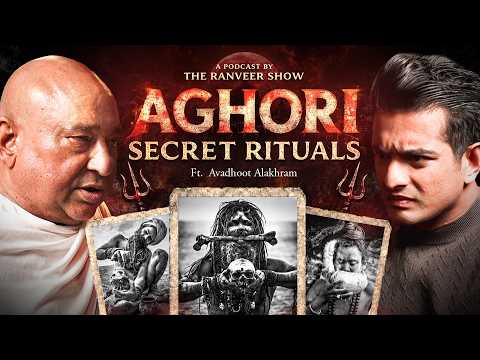
Explore the hidden history of Vedic rituals, from the reverence for deities like Varuna to controversial connections with occult practices and ancient black magic, as discussed on The Ranveer Show.

Quick summary
This article delves into the intriguing discussion between Ranveer Allahbadia and Ashris on The Ranveer Show, exploring the complex world of Vedic rituals. It examines the historical and spiritual significance of these ancient practices, focusing on the role of deities like God Varuna. The piece also addresses the nuanced relationship between Vedic traditions and concepts often labeled as 'occult' or 'black magic,' offering a clear, contextual understanding. By dissecting popular misconceptions, it sheds light on the true nature and evolution of these profound practices in ancient India.
- →Vedic rituals are foundational ancient Indian spiritual practices, emphasizing cosmic order and human-divine connection through elaborate ceremonies.
- →God Varuna is a pivotal Vedic deity associated with cosmic law (Rita), moral justice, and the waters, demanding truth and ethical conduct from humans.
- →The 'occult' in Vedic traditions often refers to esoteric, hidden knowledge requiring deep study and initiation, rather than malevolent practices.
- →Practices sometimes labeled 'black magic' within the Atharvaveda were part of a broader system addressing practical concerns, with ethical warnings against misuse.
Questions answered
Chapters
All 9 chapters across the full episode — click any to jump there.
Introduction
In a thought-provoking episode of The Ranveer Show, host Ranveer Allahbadia welcomes back Ashris, a distinguished guest known for his deep insights into ancient Indian wisdom. Their conversation ventures into the often-misunderstood realm of Vedic rituals, peeling back layers of history, spirituality, and societal constructs. The discussion aims to demystify complex concepts, from the intricate practices dedicated to celestial beings like God Varuna to the controversial interpretations of 'occult' traditions and 'black magic' within ancient Indian texts. This episode serves as a crucial exploration for anyone interested in the foundational spiritual practices of India, challenging preconceived notions and offering a nuanced perspective on practices that have shaped millennia of thought and culture. Through this deep dive, listeners gain a clearer understanding of how these ancient traditions have been preserved, transformed, and often misinterpreted over time, providing a vital bridge between past wisdom and contemporary understanding of spirituality and ethics. Ashris, with Ranveer's guidance, illuminates the true essence and historical context of these powerful, often 'shocking,' Vedic practices.
More episodes on Vedic History & Spirituality · Browse all creators or recent episodes.
What Are Vedic Rituals and Their Historical Significance?
Vedic rituals, rooted in the ancient Indian scriptures known as the Vedas, represent a cornerstone of Hindu spiritual practice and philosophy. These elaborate ceremonies, often centered around fire sacrifices (yajnas or homas), were designed to connect humans with the divine, maintain cosmic order (Rita), and seek blessings for prosperity, health, and spiritual well-being. Dating back over 3,500 years, these rituals weren't merely symbolic; they were considered potent acts with tangible effects on both the individual and the cosmos. Early Vedic texts meticulously detail the specific mantras, offerings, and procedures required for each ritual, emphasizing precision and devotion.
The historical significance of Vedic rituals extends far beyond their religious implications. They played a crucial role in shaping the social, cultural, and even political fabric of ancient Indian society. The performance of grand yajnas by kings and sages underscored their authority and piety, reinforcing community bonds and moral values. These practices provided a framework for understanding the universe, one's place within it, and the ethical responsibilities that came with it. Over millennia, while some practices evolved or became more internalized, the core principles of seeking harmony, gratitude, and spiritual alignment through ritual have profoundly influenced subsequent Indian spiritual traditions, including Hinduism, Jainism, and Buddhism, albeit in varying forms.
The early Vedic period saw the development of sophisticated ritualologies, interpreted and taught by specialized priests (brahmins). These rituals were seen as a means to invoke and appease deities, ensuring the continuation of natural cycles and human welfare. The belief was that proper performance of these rituals created a symbiotic relationship between humanity and the divine, where offerings sustained the gods, and in return, the gods bestowed their grace upon the world. This intricate system of reciprocal exchange formed the bedrock of early Vedic cosmology and remains a powerful underlying current in many contemporary Hindu practices, though often adapted and simplified.
How Does God Varuna Connect to Ancient Vedic Practices?
God Varuna holds a uniquely powerful and complex position within the Vedic pantheon, often associated with the sky, water, and, most importantly, cosmic order (Rita) and moral law. Unlike some other deities known for specific boons or destructive power, Varuna is primarily revered as a guardian of truth, righteousness, and the ethical fabric of the universe. Ancient Vedic prayers to Varuna frequently implored him for forgiveness from sins committed, highlighting his role as a celestial judge who oversees human actions and ensures the balance of dharma. He is depicted as all-seeing, observing the world with a thousand eyes, thus inspiring a profound sense of moral accountability among devotees.
Rituals dedicated to Varuna typically involved offerings of soma, milk, and grain, often performed near water bodies or during times when rain was crucial. These practices sought not only his favor for agricultural prosperity and protection from floods but also his purifying influence to cleanse individuals of their transgressions. The solemnity of these rituals reflected the awe and respect commanded by Varuna, whose power could manifest as both benevolent rain-giver and stern punisher of falsehood. His connection to water symbolized purification and the underlying currents of cosmic law that permeate all existence.
Ashris, in his discussion with Ranveer Allahbadia, likely elaborates on Varuna's dual nature: benevolent provider and strict enforcer of justice. This multifaceted portrayal makes Varuna a compelling figure in Vedic thought, embodying the idea that divine power is intrinsically linked to upholding ethical standards. Understanding Varuna's role is crucial for grasping the moral and cosmic dimensions embedded within Vedic rituals, moving beyond mere appeasement to a deeper engagement with universal laws of conduct and consequence. His presence reminds us that ancient spiritual practices were deeply intertwined with a sophisticated understanding of ethics and cosmic responsibility.
Exploring the Occult in Ancient Vedic Traditions
The term 'occult' often conjures images of secret societies and dark magic, but within the context of ancient Vedic traditions, it typically refers to esoteric knowledge—that which is hidden or revealed only to initiates. This 'hidden' aspect doesn't inherently imply malevolence but rather a profound understanding of reality and consciousness that requires specific training, discipline, and often, a guru's guidance to unlock. Many Vedic mantras and ritualistic practices possess layers of meaning, with their deepest efficacy becoming accessible only to those who have undergone rigorous spiritual and intellectual preparation. These were not public spectacles but rather private, often intensive, spiritual pursuits.
Within the broader post-Vedic traditions, particularly systems like Tantra, elements that might be labeled 'occult' by modern observers become more pronounced. Tantric practices, while distinct from the earliest Vedic fire rituals, draw upon similar cosmic principles but often employ different methodologies—including meditation, visualization, and specific physical postures—to achieve spiritual transformation and command over subtle energies. These practices are frequently shrouded in mystery, partly due to their complex nature and partly because their misuse could be detrimental. The true 'occult' in this sense is about mastering the unseen forces and laws of the universe, not for control over others, but for self-realization and spiritual liberation.
The discussion on The Ranveer Show likely explores how these esoteric dimensions, while integral to certain spiritual paths, can be misconstrued when viewed through a modern, often fear-based lens. Understanding the 'occult' in ancient Indian thought requires distinguishing between practices aimed at spiritual enlightenment and those perceived as manipulative or harmful. It's about recognizing that knowledge of subtle energies and consciousness was deeply explored, and while some aspects were kept guarded, their primary intent was often spiritual growth, not nefarious control. The 'occult' here represents the profound, often hidden, mechanics of spiritual transformation.
Understanding 'Black Magic' in Ancient Indian Contexts
The concept of 'black magic' is fraught with modern misconceptions when applied to ancient Indian traditions. While the Atharvaveda, one of the four Vedas, does contain hymns and spells intended for various purposes—including healing, protection, ensuring prosperity, and even harming enemies—it's crucial to understand these within their historical and ethical frameworks. Ancient societies often viewed such practices as a legitimate means of exerting influence, whether for defense, justice, or offense, similar to warfare or legal disputes. These weren't necessarily considered 'evil' in the modern sense but rather tools that could be wielded with intent, good or bad.
The Atharvaveda, in particular, showcases a more pragmatic and folk-oriented side of Vedic life, dealing with everyday concerns like disease, evil spirits, and personal grievances. It provides specific mantras and rituals for warding off curses, healing ailments, or even attracting love. When 'black magic' is discussed, it usually refers to the subset of these practices intended to cause harm or manipulate others against their will. However, even within the Atharvaveda, there are strict injunctions and karmic warnings against the misuse of such powers. The emphasis was often on protection from malevolent forces, not just on casting curses.
Ranveer Allahbadia and Ashris likely dissect how these ancient practices, when taken out of context, can fuel sensationalism. They would stress that the ethical implications of 'black magic' were well understood in ancient India, with practitioners facing societal consequences and negative karmic repercussions for misusing their knowledge. Distinguishing between a protective charm and a malicious spell, and understanding the motivations behind them, is key to comprehending the nuances of what might superficially be labeled 'black magic.' It was less about inherently 'evil' magic and more about the intent and ethical implications of wielding powerful, subtle forces.
Historical Evolution: From Vedic Yajnas to Later Esoteric Practices
The spiritual landscape of India underwent significant transformations from the early Vedic period, characterized by grand public yajnas, to later eras that saw the emergence of more individualized and esoteric practices. Initially, the emphasis was on external ritual performance, communal participation, and the meticulous recitation of hymns to appease deities for collective well-being. These fire sacrifices were complex events, requiring precise knowledge of mantras, offerings, and timing, often lasting for days or even weeks and involving numerous priests.
As centuries progressed, especially with the philosophical developments articulated in the Upanishads (circa 800-400 BCE), the focus gradually shifted from purely external ritualism to internal spiritual realization. The Upanishads introduced concepts like Brahman (the ultimate reality) and Atman (the individual soul), positing that true sacrifice could be performed internally through meditation, self-inquiry, and the pursuit of knowledge. This shift did not entirely negate Vedic rituals but reinterpreted their deeper, symbolic meanings, paving the way for paths like Yoga and Vedanta, which prioritized introspection and inner transformation over outward ceremonies.
Further evolution in the post-Vedic and Puranic eras (roughly 300 CE onwards) saw the rise of Bhakti (devotional worship) and various Tantric traditions. Tantra, in particular, moved beyond the public, fire-centric rituals to embrace more personalized, often secret, practices involving specific deities, mandalas, mantras, and advanced yogic techniques aimed at spiritual liberation and empowerment. These esoteric paths often incorporated elements of the 'occult' as they delved into hidden energies and consciousness, diverging significantly from the original Vedic yajna but retaining an underlying connection to ancient spiritual principles. This complex historical trajectory highlights the dynamic nature of Indian spirituality, constantly evolving while preserving foundational wisdom.
Modern Perceptions and Misconceptions of Vedic Rituals and Occultism
In contemporary society, Vedic rituals and terms like 'occult' and 'black magic' are often subjected to a wide array of perceptions, many of which are fueled by misinformation, sensationalism, and a lack of historical context. Pop culture, mass media, and simplified narratives frequently portray these ancient practices in a distorted manner, reducing complex spiritual traditions to simplistic notions of superstition or malevolence. This creates significant misconceptions, where profound philosophical systems are conflated with charlatanry or dark arts, leading to both fear and dismissive attitudes among the general public.
One significant misconception arises from the tendency to view ancient practices through a purely rational, scientific lens without appreciating their symbolic, psychological, or spiritual dimensions. What might appear as 'irrational' to a modern mind could have held deep meaning and efficacy within its original cultural framework. For instance, the intricate designs of yantras or the specific sounds of mantras are not random; they are believed to be codified representations of cosmic energies and psychological states that interact with human consciousness in specific ways. Disregarding these deeper meanings leads to a superficial understanding.
Another prevalent issue is the conflation of genuine esoteric knowledge—which requires rigorous study and ethical conduct—with manipulative practices that exploit belief. The Ranveer Show discussion, featuring Ashris, likely emphasizes the crucial need for scholarly study, authentic guidance, and an open yet critical mind to discern truth from fabrication. Understanding the enduring legacy of Vedic wisdom requires moving past sensationalized portrayals and engaging with the texts and traditions in their proper historical, cultural, and spiritual context. Only then can one truly appreciate the depth and continued relevance of these ancient practices in shaping human thought and spirituality, recognizing their true power and avoiding harmful misinterpretations.
Key insights from Ranveer Allahbadia
The most important takeaways from this episode, distilled for quick reference and deeper reading.
- 1
Vedic rituals are foundational ancient Indian spiritual practices, emphasizing cosmic order and human-divine connection through elaborate ceremonies.
- 2
God Varuna is a pivotal Vedic deity associated with cosmic law (Rita), moral justice, and the waters, demanding truth and ethical conduct from humans.
- 3
The 'occult' in Vedic traditions often refers to esoteric, hidden knowledge requiring deep study and initiation, rather than malevolent practices.
- 4
Practices sometimes labeled 'black magic' within the Atharvaveda were part of a broader system addressing practical concerns, with ethical warnings against misuse.
- 5
Indian spiritual practices evolved significantly from communal Vedic yajnas to internalized Upanishadic philosophy and diverse esoteric Tantric traditions.
- 6
Understanding ancient Vedic concepts requires shedding modern biases and engaging with historical and cultural contexts to avoid misinterpretation.
- 7
The Ranveer Show with Ashris provides a rare deep dive into the nuances of these often-misunderstood ancient Indian spiritual traditions.
- 8
Distinguishing between genuine spiritual practices and sensationalized narratives is crucial for appreciating the depth of Vedic wisdom.
Notable quotes
"The true power of Vedic chants lies not just in their sound, but in the conscious intent and ancient wisdom they embody; it's a science of vibrations and consciousness."
"To truly grasp ancient practices, even those labelled 'black magic,' we must shed modern biases and delve into their specific historical and ethical frameworks."
"Varuna's role as the guardian of cosmic order reminds us that our actions, big or small, are interwoven into the fabric of the universe, demanding accountability."
Key moments
Timestamped excerpts from the conversation. Click a timestamp to jump straight to that moment on YouTube.
- Ranveer Allahbadia introduces Ashris, setting the stage for a deep exploration into the ancient and often controversial world of Vedic rituals.
- Ashris initiates the discussion by explaining the fundamental purpose and spiritual significance of early Vedic fire sacrifices (yajnas).
- The conversation shifts to the profound role of God Varuna as the guardian of cosmic order, moral law, and the deity associated with waters.
- Ranveer and Ashris explore how certain esoteric and 'hidden' knowledge within Vedic and post-Vedic texts can be misunderstood as 'occult' practices.
- Ashris provides context on specific hymns or remedies found in the Atharvaveda, clarifying their original intent versus modern 'black magic' interpretations.
- The discussion traces the historical evolution of ritual practices, from elaborate public ceremonies to more individualized and internalized spiritual paths over millennia.
- Ranveer Allahbadia probes into contemporary perceptions and persistent misconceptions surrounding ancient concepts of 'black magic' and their ethical implications.
- The hosts offer concluding thoughts on the enduring relevance of Vedic wisdom and the importance of re-examining these ancient traditions with an open, informed perspective.
- Ashris emphasizes the need for responsible scholarship and spiritual insight when approaching complex subjects like ancient ritualism and subtle energies.
Resources mentioned
Some links below are affiliate links. If you buy through them we may earn a small commission at no extra cost to you. Curation stays independent.
Frequently asked questions
What is a Vedic ritual?
A Vedic ritual is an ancient Indian religious ceremony, often involving fire sacrifices (yajnas) and the recitation of specific mantras from the Vedas.
A Vedic ritual is an ancient Indian religious ceremony, often involving fire sacrifices (yajnas) and the recitation of specific mantras from the Vedas. These rituals were performed to connect with deities, maintain cosmic order, and seek blessings for various aspects of life, from prosperity to spiritual well-being.
More on Vedic History & SpiritualityWho is God Varuna in Hinduism?
In Hinduism, particularly in the Vedic period, God Varuna is a prominent deity associated with the sky, waters, cosmic order (Rita), and moral law.
In Hinduism, particularly in the Vedic period, God Varuna is a prominent deity associated with the sky, waters, cosmic order (Rita), and moral law. He is seen as an all-seeing judge who punishes falsehood and rewards righteousness, ensuring ethical conduct and the balance of the universe.
More on Vedic History & SpiritualityAre there occult practices in the Vedas?
While the Vedas contain esoteric knowledge and practices requiring initiation, often referred to as 'hidden' or 'occult' in the sense of being profound and specialized, this doe…
While the Vedas contain esoteric knowledge and practices requiring initiation, often referred to as 'hidden' or 'occult' in the sense of being profound and specialized, this doesn't imply malevolence. These practices were generally aimed at spiritual enlightenment, understanding subtle energies, and achieving self-realization, distinct from modern connotations of dark magic.
More on Vedic History & SpiritualityDoes the Atharvaveda contain 'black magic'?
The Atharvaveda includes hymns and spells for various purposes, including healing, protection, and sometimes influencing events or individuals.
The Atharvaveda includes hymns and spells for various purposes, including healing, protection, and sometimes influencing events or individuals. While some of these might be interpreted as 'black magic' due to their intent to harm or manipulate, the texts also contain ethical warnings against misuse, and many practices were for defensive purposes or remedies against perceived evils, not inherently malicious.
More on Vedic History & SpiritualityHow have Vedic rituals changed over time?
Vedic rituals have evolved significantly from grand public fire sacrifices (yajnas) to more internalized and individualistic practices.
Vedic rituals have evolved significantly from grand public fire sacrifices (yajnas) to more internalized and individualistic practices. The Upanishads shifted focus to inner realization and meditation, while later traditions like Tantra incorporated esoteric techniques and personalized deity worship, though core philosophical principles often remained.
More on Vedic History & SpiritualityWhy is it important to study ancient Vedic traditions?
Studying ancient Vedic traditions offers profound insights into the foundations of Indian spirituality, philosophy, and societal structures.
Studying ancient Vedic traditions offers profound insights into the foundations of Indian spirituality, philosophy, and societal structures. It helps in understanding the historical evolution of religious thought, demystifying misconceptions about terms like 'occult,' and appreciating the depth of human quest for cosmic understanding and ethical living.
More on Vedic History & SpiritualityRelated topics
Explore the topic cluster around this conversation.
People also search
Related episodes
Continue exploring
More from Ranveer Allahbadia



Latest episodes


Discussion
Sign in to join the discussion.
Sign in